
Electric Bike Specs That Actually Matter When Comparing Models
Use this as the translation layer between marketing specs and the daily ownership questions those specs are supposed to answer.
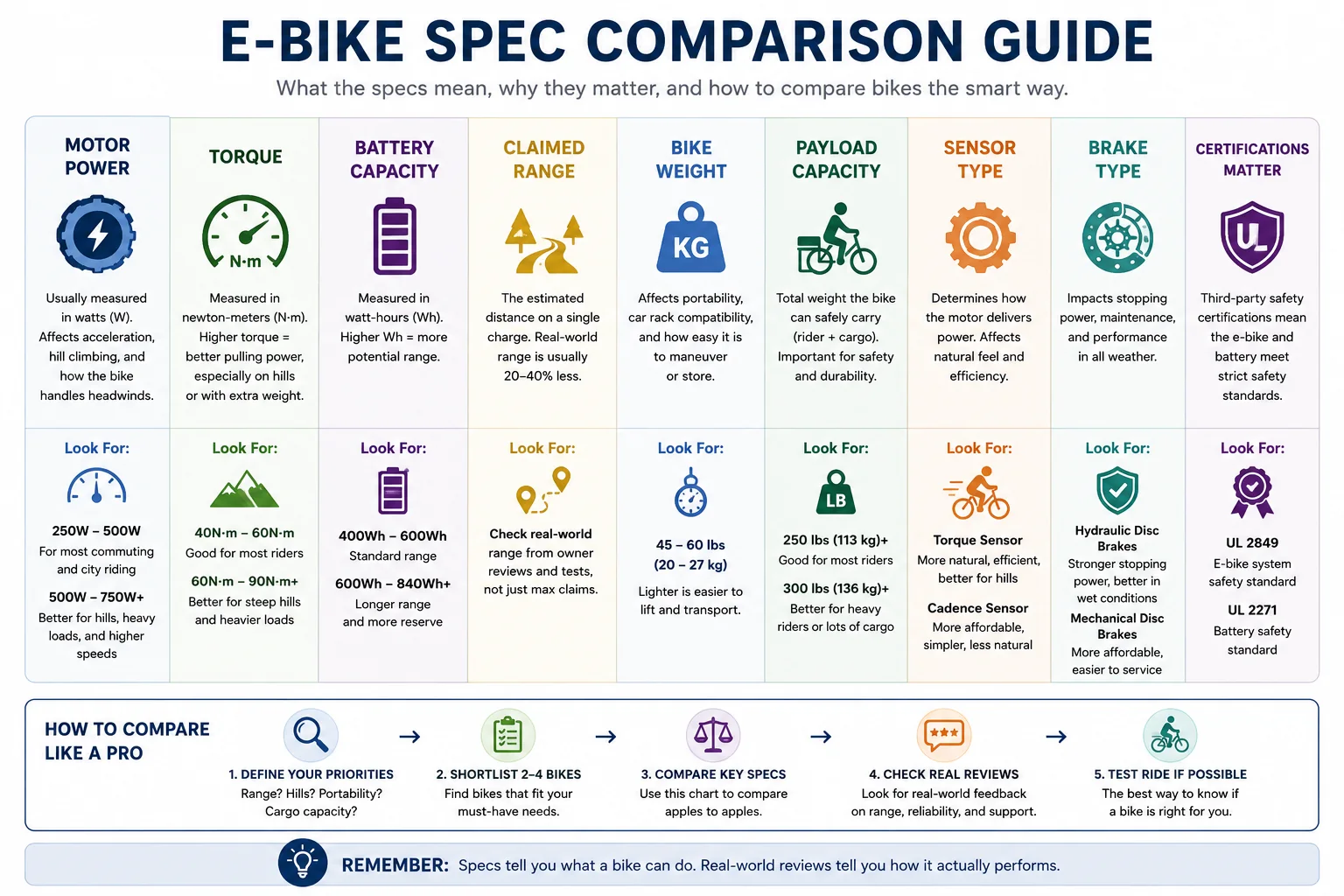
Quick take
- Specs matter, but not equally for every buyer.
- Range, torque, motor power, battery size, weight, payload, and sensors should be compared against a real route and storage setup.
- Support, warranty, and replacement parts are also specs in practice, even if they are not printed on the downtube.
The practical spec chart
| Spec | What it tells you | What it does not tell you |
|---|---|---|
| Motor watts | General power class and likely acceleration/help under load. | Real hill performance without considering torque, controller tuning, rider weight, and gearing. |
| Torque | How strongly the bike may help from a stop or on climbs. | Whether the ride feels smooth or whether the rest of the bike is well built. |
| Battery watt-hours | A better capacity clue than voltage or amp-hours alone. | Your exact range in cold weather, hills, high assist, or throttle use. |
| Claimed range | The brand's best-case or test-condition expectation. | Your commute unless the conditions match your route, weight, speed, and assist level. |
| Bike weight | Storage, lifting, rack compatibility, and apartment practicality. | How stable or comfortable the bike feels once moving. |
| Payload | Total rider/cargo/passenger load the brand says the bike can handle. | Whether the bike feels calm, balanced, and easy to control at that load. |
| Torque sensor | Often a smoother, more natural assist feel. | That the bike is automatically better for every rider or riding need. |
| Hydraulic brakes | Usually stronger, easier stopping with less hand effort. | Long-term brake quality without considering pads, rotors, setup, and service. |
| UL certification | A meaningful battery/system safety signal when specific and verifiable. | That careless charging, storage, or damage no longer matters. |
Use specs to answer buyer questions
A spec sheet is useful only when it answers something practical. Will the bike climb your hill? Can you carry it? Does the battery remove? Can a shop work on it? Is the range enough after a year or two of real use? Does the frame fit? That is why ElectricBikeCompare pages translate specs into ownership tradeoffs instead of treating one number as the whole decision.
Torque vs Cadence Sensor
Ride feel and control matter more than the label alone.
Mid-Drive vs Hub Motor
Important for hills, maintenance, price, and ride feel.
How Much Range?
Why claimed range needs a real-world safety margin.
Weight and Payload
How to read the numbers before buying a heavy bike.
Never compare specs without comparing the situation
The same battery, motor, or frame style can be perfect for one buyer and wrong for another. The comparison only becomes useful after you name the rider, route, storage setup, cargo load, service expectations, and budget.