
Can You Carry Two Kids on an E-Bike?
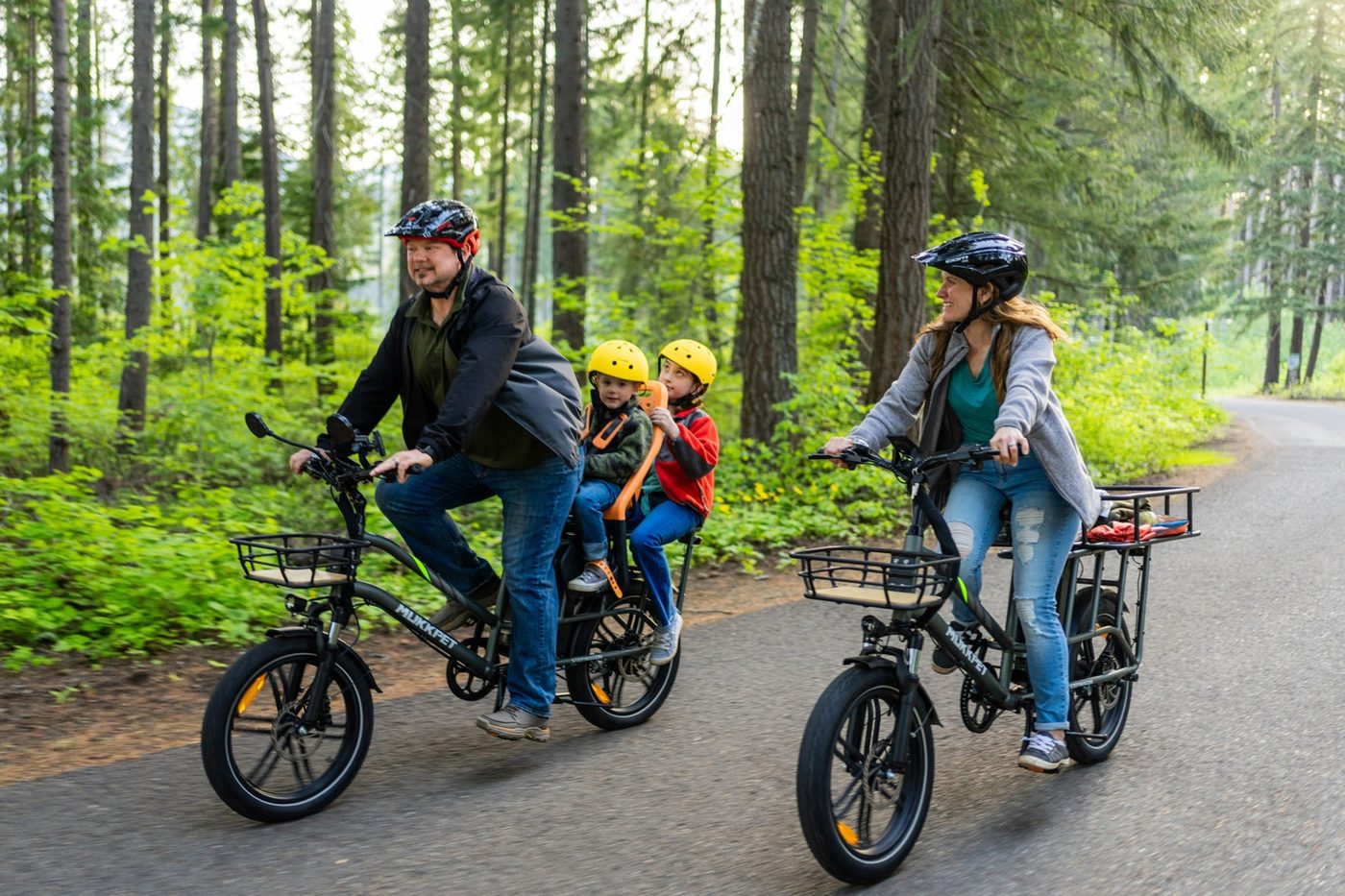
Some cargo e-bikes can carry two kids, but this is a purpose-built family-cargo question, not a generic rear-rack question. The bike needs the right passenger system, enough payload margin, stable loading, foot protection, braking confidence, and a route that still feels calm with two passengers.
Editorial review note: This page is reviewed under ElectricBikeCompare's higher-risk passenger-safety standard. Use it alongside the official guidance for your exact bike, passenger kit, child seats, and local rules.
Quick answer
- Some cargo e-bikes can carry two kids; most regular e-bikes should not be treated as two-kid haulers.
- The deciding factors are passenger-rated hardware, total payload, child size, foot protection, braking, balance, and local rules.
- If two-kid carrying will be routine, start with a real long-tail or family cargo e-bike instead of adding accessories to a normal commuter bike.
Quick decision for two-child setups
| Verdict | What it usually means |
|---|---|
| Yes | The bike is a family cargo model with a supported two-passenger setup, enough payload margin, proper seats/rails/foot protection, and a route you can ride calmly. |
| Maybe | The bike supports one child well, but two kids may depend on their size, accessory limits, local rules, and whether the rear rack is truly passenger-rated. |
| No | The bike is a normal commuter, cruiser, folding bike, or rack-equipped e-bike that was not designed around two child passengers. |
The bike is designed around kid carrying, has the right rear-rack rating, and supports proper passenger accessories.
You are trying to improvise with a normal commuter, a light utility bike, or a rack that is merely convenient rather than passenger-ready.
Confusing "can physically hold the weight" with "is built for routine family riding with real kids."
The short answer
Yes, but the right bike matters more than buyers expect. Two-kid carrying is usually a cargo-bike question, not a generic e-bike-accessory question. The more your life depends on school runs, daycare pickups, or calm loading and unloading, the more important purpose-built passenger hardware becomes.
When the answer is yes, maybe, or no
| Situation | Answer | Why |
|---|---|---|
| Purpose-built family cargo e-bike with passenger-rated hardware and correct accessories. | Usually yes | This is what longtail and family cargo systems are built to do when used within limits. |
| Compact utility bike with an approved passenger kit and clear weight limits. | Maybe | It depends on child size, seating hardware, local rules, and whether loading feels stable. |
| Normal commuter e-bike with a standard rack or improvised seat setup. | No | A rack that can hold cargo is not automatically safe or legal for two children. |
What the bike actually needs
- Passenger-rated rear rack: not just a rack that exists, but one intended for real passenger weight.
- Foot support and foot protection: feet should not be dangling near a moving wheel.
- Proper seating: child seats for smaller kids, or a bench / bars / side protection for older ones.
- Stable loading: a strong kickstand and low center of gravity matter more than top speed.
- Manageable geometry: the bike has to feel calm when starting, stopping, and balancing two moving kids.
What current family cargo systems show
Tern’s current family guidance is useful here because it treats kid carrying as a system. Tern says the Quick Haul Long can carry up to two kids or one adult passenger, and it stresses that kid setups need seating, harnessing where appropriate, foot support, and foot/leg protection. That is the right way to think about it. The answer is not "add pegs and hope." It is "use a bike and accessory ecosystem that was designed for this."
When two-kid carrying is realistic
Two-kid carrying is most realistic when the kids are within the bike’s intended passenger setup, your route is urban or suburban rather than high-speed traffic-heavy, and you can load calmly. Compact cargo bikes and longtails work better than normal commuters because the weight sits lower and the passenger ecosystem is much more mature.
When it becomes a bad idea
- the bike is too tall or top-heavy for you
- you are trying to retrofit a standard commuter rack
- your kids are too big for the intended setup
- the route includes fast traffic, sketchy starts, or too many awkward hills before you are comfortable
- you know you still feel nervous riding one child, let alone two
Age and size matter more than buyers want to hear
There is no universal "two kids" answer because two toddlers in approved child seats is different from one elementary-age kid plus one larger passenger. The older and bigger the passengers get, the more you need to care about rear-rack limits, bike handling, and how cramped the setup feels. A setup that works for a year or two may stop being enjoyable long before the official numbers are exceeded.
What usually works best
If this is a real family-transport role, the best answer is usually a true cargo e-bike with a proven kid-carrying accessory ecosystem. If you only occasionally need to move two kids, a kid trailer or one-kid bike plus occasional alternative transport may actually be easier. The wrong move is buying a normal commuter and trying to force it into family cargo duty.
Choose the bike first, then the kid setup
Do not buy passenger accessories hoping they will turn the wrong bike into a family hauler. Start with the family cargo e-bike guide, then confirm the exact passenger kit, age/weight limits, foot protection, handholds, and loading routine for your children.
Bottom line
An e-bike can carry two kids only when the entire setup is designed for it: bike frame, rack, seats or rails, foot protection, payload, brakes, and route. If you have to argue yourself into the setup, it is probably the wrong bike. For routine two-kid rides, shop family cargo bikes first.
Sources used for this page
This page is based mainly on primary bike and accessory guidance rather than generic passenger advice. That includes official payload, passenger-kit, rack, and child-seat guidance from bike and accessory makers, plus the local rules that apply to the exact setup.