
How to Transport an E-Bike on a Car Rack
Practical guidance on rack type, weight limits, battery removal, and loading without turning transport into another expensive ownership mistake.
Editorial review note: This page is reviewed under ElectricBikeCompare's transport-sensitive editorial standard. Use it alongside the official instructions for your exact vehicle, rack, bike weight, and battery handling setup.
The short answer
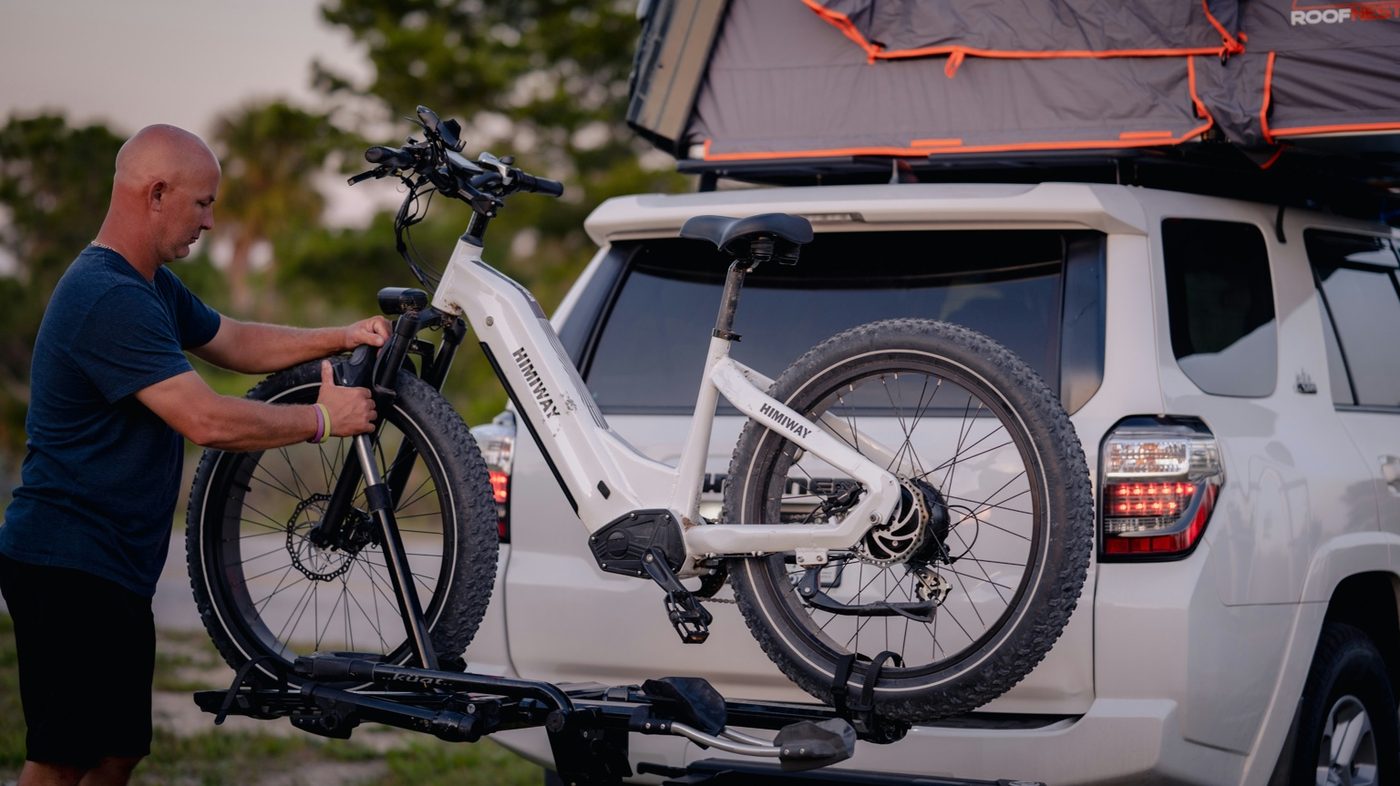
Most e-bikes belong on a hitch-mounted platform rack, not a roof rack and not whatever old tray rack is already in the garage. Weight is the first filter. If the bike is heavy enough that loading already feels sketchy, the rack is probably the wrong tool for it.
Start with weight, not marketing
E-bike transport decisions get bad fast when buyers start with brand names and skip the basic math. You need to know the bike weight, the rack’s per-bike limit, the total limit, and whether the rack is actually intended for e-bikes. A rack that works for a light analog bike is not automatically a good e-bike rack.
- check the rack’s per-bike capacity
- check the total system limit
- confirm wheelbase and tire compatibility
- confirm it works with fenders or step-through frames if those matter
Why hitch racks usually make more sense
For most everyday e-bikes, a hitch platform rack is the realistic answer. The bikes load lower, the trays are usually better suited to heavier bikes, and many e-bike-specific racks offer ramps or wider wheel support. Roof racks can work for very light bikes, but they stop being practical quickly once the bike is heavy, awkward, or fitted with fenders and accessories.
Remove what you can before loading
If the battery and display are removable, take them off before transport and store them inside the car when possible. That reduces lifting weight and gives expensive components more protection. It also helps when the bike is close to the rack’s limit and you are trying to keep loading manageable instead of wrestling the whole thing at full weight.
What buyers get wrong
The most common mistakes are pretending a marginal rack is fine, ignoring how awkward the bike is to lift, and assuming every clamp position is acceptable. Heavy step-through and cargo-leaning bikes especially need a rack that actually suits the frame, not a universal-looking solution that only works well with simpler bikes.
- do not ignore rack weight limits
- do not transport the bike at full accessory weight if you can remove cargo, batteries, or baskets first
- do not assume a roof rack is practical just because it fits the vehicle
- do not treat a shaky loading process as normal
When car-rack transport stops making sense
If the bike is simply too heavy for safe loading, too long for the rack, or too awkward for one person to handle comfortably, the answer may be a different rack, a lighter bike, or a different transport plan. This is especially true for cargo bikes and some heavier fat-tire models. There is a point where forcing it becomes the expensive option.
FAQ
Should I remove the battery before putting an e-bike on a rack?
Usually yes, if the battery is removable and the manufacturer allows it. It reduces weight and gives the battery better protection during transport.
Are roof racks good for e-bikes?
Usually not for heavier everyday e-bikes. They can work for lighter bikes, but many practical commuter and utility models are better suited to hitch-mounted platform racks.
Do I need a ramp?
Not always, but once the bike is heavy enough that lifting feels awkward, a ramp stops sounding optional.
Match the rack to the real loaded weight
The most common mistake is shopping the rack as if the bike weighs what the marketing page says in ride-ready form. Thule’s current T2 Pro XTR is rated for e-bikes up to 60 pounds per bike, and that kind of limit matters because many e-bikes only fit comfortably after you remove the battery and sometimes other accessories. A rack that is technically “for bikes” is not automatically right for a 70-pound fat-tire utility bike with fenders, a rack, and a child seat still attached.
Before you buy a rack, figure out the actual transported weight and shape: battery removed or not, step-through or high-step frame, wheelbase, tire width, and whether the bike has large fenders or running boards that interfere with clamps. Then think about loading height. A compatible rack is not enough if you still dread loading the bike onto your vehicle. For many riders, the right answer is not just a stronger rack. It is a lighter bike, a battery-removal routine, or a lower, easier-to-load hitch setup.
Sources used for this page
This page is based mainly on primary rack and transport guidance. That includes official rack weight limits, loading instructions, battery-removal guidance where relevant, and vehicle and hitch requirements from rack makers and bike brands.
Still deciding whether the bike is realistic for travel, storage, and everyday hauling?
These pages help if the practical question is not just what to buy, but how much hassle the bike adds once you own it.